The maneuver nobody audits: independent shiphandling observation, recorded evidence, and the professional judgment behind tug and offshore fleet safety
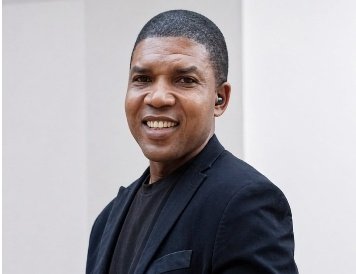
By: Captain Francis Modozie
MNI | Master Mariner (Unlimited) | Founder and Principal, SeaFleet Backbone LLC
Every day, tugboats and offshore support vessels complete difficult assignments and return without incident. A ship is berthed. A barge is moved. An offshore installation receives its cargo. The operations log records a successful job, and the vessel prepares for the next one.
But there is a question that does not always appear in the log: Was the vessel maneuvered with the judgment, control, and safety margin that its particular design and assignment required?
A safe return tells an owner the outcome. It does not, by itself, reveal whether the approach was well planned, whether available propulsion was used effectively, or whether a developing problem was recognized early enough. An assignment may be completed successfully while an unnecessary operational risk goes unexamined.
That is the case for periodic, independent shiphandling observation. Not because tug masters are presumed deficient, but because the most meaningful part of their work takes place on the bridge, often beyond the direct view of shore management.
What the office may never hear from the wheelhouse
The master’s authority is fundamental to safe vessel operation. On smaller crews, however, that same authority can make difficult conversations less likely. A junior officer may hesitate to question a recurring practice, especially when the master also influences training, appraisal, or future assignments.
A chief engineer may notice unusual control demands, repeated propulsion alarms, or operating patterns that deserve investigation. Yet equipment defects are often reported separately from the maneuvering decisions that preceded them. The office receives the defect list, not necessarily the complete operating story.
Internal familiarization also has natural limits. Good operators invest in coaching, assessments, and supervision, but established methods can pass from one generation of masters to the next without independent comparison. Some habits deserve to be repeated; others deserve a fresh look.
The absence of a complaint is not the same as evidence that the maneuvering process has been examined. An independent master may see ordinary practice from a different professional angle, while giving the operating master an opportunity to explain the decisions made.
The same license does not make every tug handle the same way
Experience on a conventional twin-screw tug is not a substitute for vessel-specific familiarization on an azimuth stern drive (ASD) tug. Neither is experience on an ASD automatically sufficient for a tractor tug, a single-screw workboat, or a diesel-electric offshore support vessel with joystick and dynamic-positioning modes.
An ASD master must understand thrust direction, unit coordination, interaction effects, and the vessel’s response at different operating settings. On a conventional twin-screw tug, differential propulsion, rudder wash, momentum, and environmental forces may dominate the approach. Without a bow thruster, sound planning must account for the limited transverse-control options.
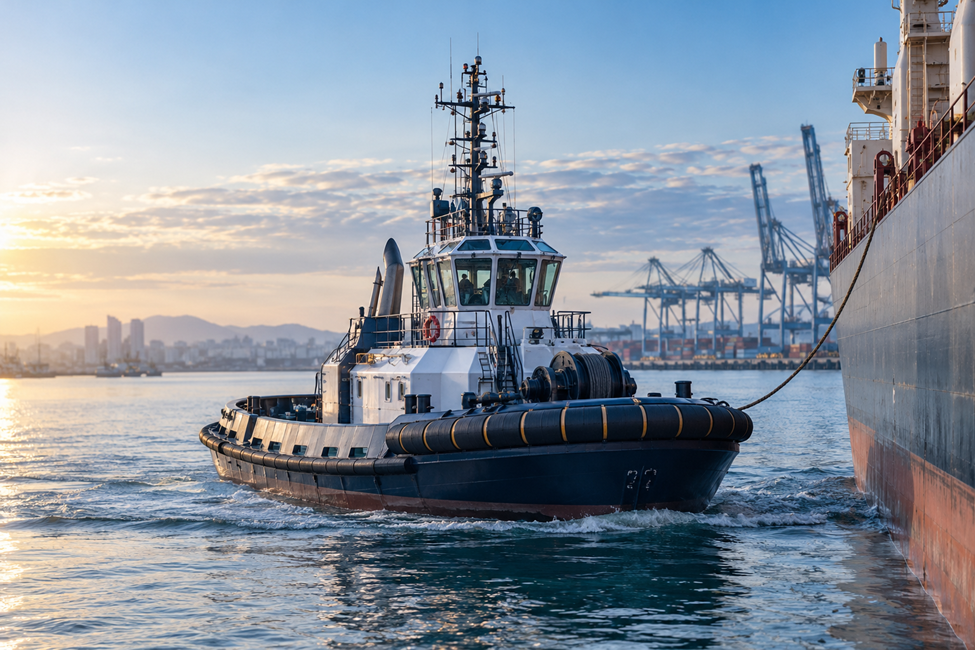
Illustrative AI-generated image; not an actual vessel, incident or review.
Tractor arrangements, including Voith Schneider and forward-azimuthing configurations, introduce different force relationships and towing geometries. On offshore support vessels, mode awareness, power management and the operating limitations of thrusters and DP systems may be equally critical. In every case, manufacturer guidance and vessel-specific operating procedures take precedence over generalized handling rules.
This is not theoretical. In the investigation involving the tug Thorngarth and tanker Stolt Aspiration, the UK Marine Accident Investigation Branch identified inadequate vessel familiarization and training for the maneuver involved. The case remains a direct warning against treating a qualification as proof of proficiency on every tug and task.
What accident investigators have already shown?
The investigation record provides examples of how speed, communications, towage arrangements, vessel response and operational margins can determine the outcome of an apparently routine assignment.
On 24 February 2023, the conventional twin-screw tug Biter girted and capsized while assisting the passenger vessel Hebridean Princess near Greenock, Scotland. Both tug crew members died. The MAIB identified shortcomings in the shared operational plan, pilot and tug exchanges, towing arrangements, and understanding of safe speeds. It recommended clearer maneuvering guidance and a recognized training scheme for tug masters.
In a safety bulletin published on 12 February 2026, the MAIB noted that its Biter investigation was its eighth involving a conventional tug capsize since 1998, a series that had claimed nine lives. The bulletin reinforced the importance of agreed plans, vessel speed, towline forces and properly rigged towing arrangements.
In the United States, the NTSB examined two bow-to-bow ship-assist casualties in 2022. The tug George M collided with the containership MSC Aquarius in the Houston Ship Channel; the tug CC Portland grounded during a maneuver to make fast to an inbound LNG carrier in the Corpus Christi Ship Channel. Excessive speed was central to the investigators’ findings.
The following year, the tug Mark E Kuebler collided with the tanker Nisalah after hydrodynamic interaction drew the tug toward the larger vessel during positioning near its starboard quarter. The NTSB found that sufficient reserve propulsion power was not available to overcome the forces at the prevailing speed. Combined damage was estimated at approximately $6.9 million.
In Canada, the Transportation Safety Board investigated the 2018 capsize of the tug George H Ledcor on the Fraser River. It found weaknesses in the operator’s management of grounding hazards, including reliance on experience and informal practices without adequate initial and recurrent training.
These are different casualties with different causal factors. None proves that a short coaching visit would have prevented the outcome. Taken together, they show why real-world shiphandling, vessel-specific competence and the practical application of procedures deserve continued attention.
Could the repair bill be telling an operational story?
Owners scrutinize running hours, fuel consumption, off-hire time, repairs and survey findings. It is sensible to ask whether the way the vessel is operated also warrants examination when abnormal defects recur.
A leaking thruster seal, damaged fender, gearbox problem or propulsion alarm may have many causes. A sound technical investigation must consider design, maintenance history, condition, operating loads and environmental effects. No competent assessor should conclude that a master caused a failure simply because the equipment was in use when it occurred.
Nevertheless, the relationship between operating loads and reliability is real. In its study Dynamic Loads on Mechanical Azimuthing Thrusters, MARIN reported that gear and bearing failures ranked second and third in surveyed damage categories for mechanical azimuthing thrusters, after propeller damage. The SHARES research effort examined hydrodynamic loads associated with operating conditions, including extreme maneuvering, interaction effects, and propeller ventilation.
This makes the chief engineer’s perspective especially valuable. Machinery data, defect history, and engineering observations can be assessed alongside actual maneuvering practices. The answer may be technical, operational, or a combination. The owner benefits from examining the evidence rather than repeatedly treating each repair as an isolated event.
A second master on board is a professional resource, not a threat
An experienced observer can watch how a master plans an approach, controls speed, coordinates propulsion, manages environmental forces, communicates with the pilot and crew, and preserves options if the first maneuver does not work as expected.
Related: Capt. Francis Modozie writes: Why Port State Control Detentions Are Usually Preventable?
Good practice should be identified and acknowledged. Where improvement is possible, a useful debrief begins with the conditions and the operating master’s reasoning, not a list of accusations. The discussion may confirm that an unfamiliar maneuver was entirely justified by the vessel’s characteristics. It may also reveal a safer or more economical alternative.
For a master who has worked for years without a professional peer observing normal operations, this can be an opportunity to compare experience. A review should add judgment and perspective while retaining the operating master’s authority and dignity.
What do CCTV and voyage data recorders tell an owner?
A shipowner with bridge cameras, electronic logs or a voyage data recorder is right to ask why an independent observer is needed. These systems can preserve an accurate account of vessel movement, selected equipment settings and, where fitted and configured, bridge communications. That information is valuable. It can support an accident investigation, but it can also be examined before an incident occurs.
Consider a tug approaching the stern quarter of a large ship in a cross-current. A camera may show the approach and a recorder may capture changes in course and speed. Neither automatically explains what the master expected the current to do, which alternatives he considered, or whether he believed he had sufficient reserve power to move clear. Those are questions worth discussing with the person who handled the vessel.
There is also a difference between fleets. SOLAS Chapter V, Regulation 20 establishes VDR carriage requirements by ship type, tonnage, and other criteria. Many smaller harbor tugs are outside those particular requirements, although they may carry CCTV or other monitoring equipment. Where VDR data is available, it should not be dismissed as useful only after a casualty. The IMO explains its investigation function, while OCIMF has published specific guidance on using VDR information proactively to improve navigational safety and examine human factors.
For some operators, the strongest review may combine an authorized playback of selected recordings with observation of a routine assignment. The visiting master can compare the available evidence with the vessel’s handling characteristics, ask the operating master to explain the maneuver, and discuss practical alternatives without turning a coaching visit into an interrogation.
Technology helps establish what happened. A thoughtful professional conversation helps explain the decisions behind it and what can be learned. Shipowners should make use of both.
How independent observation fits existing safety systems
The International Safety Management (ISM) Code emphasizes verification and continuous improvement. Element 12 addresses company verification, reviews and evaluation. Resolution MSC.353(92) introduced paragraph 12.2 on periodically verifying that personnel undertaking delegated ISM-related tasks act in accordance with company responsibilities; paragraph 12.5 deals with the independence of audit personnel, subject to the Code’s practical exception.
An onboard coaching visit is not an ISM audit. It can, however, help management understand how operational procedures and familiarization arrangements work in practice.
In the United States, 46 CFR Part 138 establishes requirements for operators using the Towing Safety Management System (TSMS) option under Subchapter M, while Part 140 addresses operational requirements. Independent shiphandling coaching should be separate from statutory inspections, credential assessments, and approved third-party organization audits.
The UK’s Guide to Good Practice on Port and Marine Facilities similarly provides relevant port-sector guidance on safe towage arrangements, training and competence. It should be treated as UK good-practice guidance, not as a universal legal requirement for all tug operators.
Aviation offers a further methodological comparison. The ICAO Line Operations Safety Audit (LOSA) approach uses trained observers during ordinary operations to understand how crews manage threats and errors. SeaFleet is not claiming to run an ICAO LOSA program; the relevant lesson is that properly designed observation can uncover practical risks that paperwork alone may not reveal.
What a well-run observation visit actually looks like
First, the owner and reviewer agree on the vessel, its propulsion and control arrangements, typical assignments, relevant recent incidents, recurring defects and the questions the visit should answer. Where relevant footage or vessel data is available, its review should be agreed in advance with the owner and crew, including any privacy and retention requirements. The reviewer also checks the vessel’s operating procedures and the competence required for the assignment.
Second, the operating master receives a transparent briefing. The scope, access arrangements, observer status, safety escalation protocol, and reporting rules must be understood before any observation begins.
Third, the reviewer observes an appropriate period of normal operation. Depending on the work, this may cover ship assist, a barge movement, berthing, a supply-vessel approach, or another authorized task. A short visit can support targeted coaching; robust assessment across different operating conditions requires a wider evidence base.
Fourth, the master and observer hold a professional debrief. The discussion recognizes sound practice, explores specific observations and agrees practical recommendations consistent with equipment limitations and company procedures.
Finally, management receives an agreed report distinguishing confirmed observations, risks, recommended actions and issues requiring engineering or other specialist investigation. Any supporting recordings should be handled under the agreed access, confidentiality and data-retention arrangements. A follow-up visit can examine whether agreed improvements have been implemented.
The visiting reviewer does not displace the vessel’s master. Onboard status, identification, port permissions, safety induction, relevant insurance and control of the vessel must be agreed. Any practical demonstration requires separate authorization, appropriate competence and safe conditions. Confidentiality should be defined realistically, particularly on vessels where individuals may be readily identifiable; urgent safety issues and mandatory reports must still be escalated.
The business case: better visibility before the next incident or invoice
A small tug company may depend heavily on the availability of just one or two vessels. For a larger fleet, the concern is often consistency across different masters, boats, assignments, and operating locations. In either case, a structured observation program gives management another source of evidence.
An independent review can help target coaching, examine repeated concerns, strengthen communication between marine and engineering teams, and test whether written procedures match actual practice. During an acquisition or financing exercise, it can also form part of wider operational due diligence.
Commercial benefits should be measured, not promised. Fewer handling-related events, improved operating consistency or a reduction in avoidable defects may be appropriate indicators, but results depend on the client’s starting conditions, implementation and the evidence collected.
The first return is simpler: the owner knows more about how the vessel is actually being operated.
The question I would put to every tugboat owner
After more than 25 years working in maritime operations, I have learned that a vessel’s condition and the judgment of the people handling it cannot be treated as entirely separate matters. Machinery can be inspected. A defect can be entered into the maintenance system. But a maneuvering habit can remain unnoticed for years when the jobs keep getting done.
When was the last time an experienced independent master watched one of your captains handle the vessel during an ordinary assignment? When a defect recurs, do you review operating practices alongside the engineering evidence? And would your crew feel able to raise a concern about a maneuver before an incident occurs?
An outside observer will not have every answer. A constructive review may nonetheless bring forward the question that nobody inside the operation has thought to ask.
A vessel returning safely is important. Understanding how safely and effectively it was maneuvered is equally important.
ABOUT THE AUTHOR
Captain Francis Modozie, MNI, is a Master Mariner (Unlimited) and Founder and Principal of SeaFleet Backbone LLC. His maritime background spans more than 25 years and includes tanker and offshore vessel operations, vessel maneuvering, fleet safety, and maritime consultancy.
#Captain Francis Modozie #IMO #Tugboat Returned Safely #SeaFleet #SOLAS Chapter V #The tug George M #The SHARES
You Might Also Like

Recommendation News

Incidents
Libya -A cargo ship has disappeared off the Jabal Akhdar region 21 January 2026
Marine Tech
Bureau Veritas and Shenzhen Port Group sign green shipping corridor pact 02 July 2026
Marine Tech
Rina introduces Mermaid, a new hybrid system that reduces ship fuel consumption 28 August 2026
Shipping Lines
The oil majors' production in the Middle East 19 March 2026
Shipping Lines
Xeneta: 'Long-term container freight rates do not cover the cost of the conflict in the Middle East. 05 May 2026